



You found the perfect rug. The colors match your sofa, the size fits the room, and the pattern grabs your attention. Then, you look at the price tag and the specifications. You see a term you don’t recognize: “Knot Density” or “KPSI.”
Suddenly, you hesitate. Is a higher number better? Does a lower number mean it will fall apart?
When you shop for Hand Knotted Rugs, the technical details matter just as much as the design. Knot density determines how clear the pattern looks, how the rug feels under your feet, and how long it survives in a busy living room.
This guide breaks down exactly what knot density is and how it changes the look, life, and cost of your next rug.
What is Knot Density?
Knot density measures the number of knots tied into a specific area of a rug. In the industry, we call this Knots Per Square Inch (KPSI).
Think of it like the resolution on your TV screen. More pixels mean a sharper image. More knots mean a finer weave.
Weavers create Handcrafted Rugs in India by tying individual loops of yarn around the warp (vertical) threads. To calculate the density, you count the number of knots along one inch of the rug’s width and one inch of its length. You multiply those two numbers to get the KPSI.
For example, if a rug has 10 knots horizontally and 10 knots vertically in a square inch, the KPSI is 100.
How Knot Density Affects Appearance
The number of knots dictates what kind of design a weaver can create. This is where the “pixel” analogy works best.
High Density (High Resolution)
If a designer wants to create a rug with curves, intricate floral patterns, or detailed portraits, they need a high knot count. With more knots packed into every inch, the lines look smooth and fluid. You can see tiny details clearly. These rugs often feel firm and dense because the fibers are packed tight.
Low Density (Low Resolution)
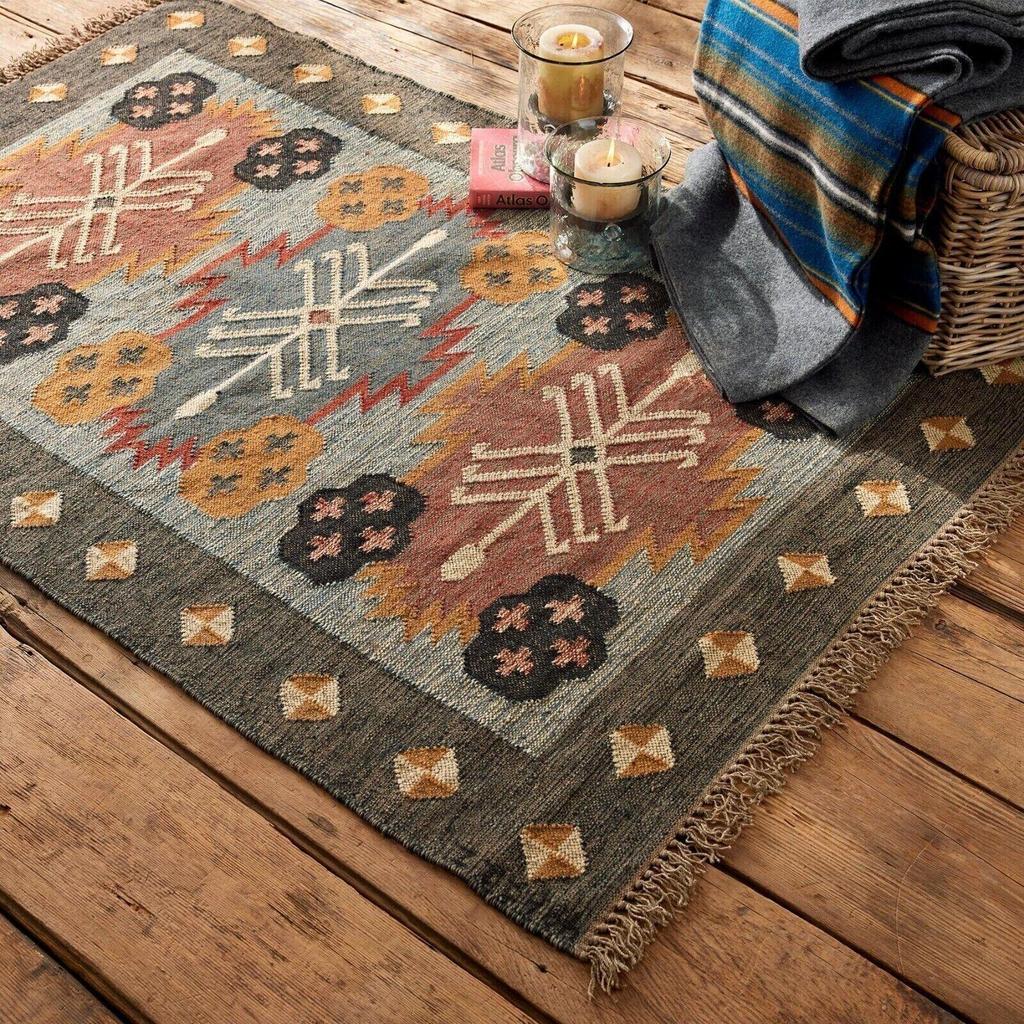
Lower knot counts result in bolder, geometric designs. You cannot weave a realistic flower with a low knot count; it will look blocky. However, this isn’t a bad thing. Many modern and tribal styles rely on these blocky, angular aesthetics. These rugs often feel plush and chunky because the weaver uses thicker yarn to fill the space.
At The Ambiente, we blend traditional craftsmanship with modern needs. We know that sometimes a room needs the sharpness of a high-knot silk rug, and other times it needs the geometric comfort of a lower-knot wool piece.
Knot Density and Rug Durability
Does a higher knot count mean the rug lasts longer? Generally, yes.
When a weaver packs knots tightly together, the rug becomes dense. This density keeps dirt and dust on the surface rather than letting it settle deep into the foundation. Vacuuming becomes more effective, and the rug resists wear and tear from foot traffic.
A rug with a high KPSI holds its shape well. Furniture legs are less likely to leave permanent dents, and the pile bounces back faster.
However, a lower knot count does not mean the rug is “bad.” It just serves a different purpose. A low-density rug with thick, high-quality wool can still last for decades if you treat it right. But if you place a loose-weave rug in a high-traffic hallway, it will show signs of wear sooner than a tightly knotted one.
Impact on Rug Cost
Labor drives the cost of Hand Knotted Rugs.
Weaving is a slow, manual process. A skilled artisan ties every single knot by hand.
- A 9×12 rug with 100 KPSI contains roughly 1.5 million knots.
- A 9×12 rug with 300 KPSI contains roughly 4.7 million knots.
The second rug requires three times the labor. It takes months, sometimes years, longer to finish. That time costs money.
When you see a higher price tag on a high-density rug, you pay for the thousands of hours the artisan spent at the loom. Conversely, lower knot density rugs are quicker to produce, making them a more accessible entry point for buyers who want handmade quality without the luxury price tag.
Choosing the Right Knot Density
You don’t always need the highest number. You need the right number for your lifestyle.
Consider the Traffic
If you plan to put the rug in a hallway, entryway, or living room, aim for a higher knot density. These areas face heavy use, and a tighter weave withstands the pressure. For a bedroom or a guest room, a lower density rug feels softer underfoot and works perfectly fine.
Consider the Style
Do you want a photorealistic traditional pattern? You need high density. Do you prefer a modern, abstract, or tribal look? A lower density works well and often provides a trendier texture.
Consider the Budget
If you want to buy rugs online India offers incredible variety at different price points. You can find beautiful, durable rugs with moderate knot counts that look fantastic and fit a reasonable budget.
At The Ambiente, we focus on the “ambience” of a room. Whether you choose a high-density silk piece or a plush wool rug, our goal is to match the rug to the mood of your living space.
The Verdict
Knot density is a vital spec, but it isn’t the only thing that matters. The quality of the wool, the skill of the weaver, and the beauty of the design play huge roles.
A high knot count guarantees a durable, clear, and intricate rug, but it requires a higher investment. A lower knot count offers a softer feel and a bolder look at a better price.
Ready to find the right match for your floor? Browse the collection at The Ambiente. We bring the heritage of Bhadohi directly to you, offering Handcrafted Rugs in India that blend age-old skills with the designs of today.
