



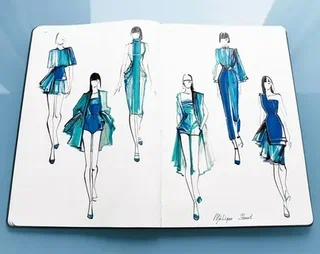
Most people associate hand-drawn illustration with fashion sketchbooks and runway presentations. But that is only where it started. Today, brands across technology, food, retail, and events are using sketch illustration to build identity, drive campaigns, and create experiences that feel genuinely human in a world saturated with polished stock imagery. The shift is significant and growing.
Here is a look at five practical ways brands are applying sketch illustration well beyond fashion, and why it is working so effectively across such different industries and media.
1. Brand Identity Systems: Logos, Mascots, and Visual Worlds
Sketch illustration is increasingly used to build brand identities that feel personal, distinctive, and harder to replicate than vector-clean alternatives.
Hand-Drawn Logos and Marks That Stand Out
Many brands begin identity development with rough-sketched explorations before refining them into final marks. Some keep the hand-drawn quality intentionally in the final logo, using visible line variation and organic imperfection to signal craft, independence, or heritage.
Sketched wordmarks and icon marks are particularly effective for:
- Food and beverage brands positioning themselves as artisanal or small-batch
- Beauty brands signalling natural, handmade, or heritage credentials
- Lifestyle brands where authenticity is a commercial advantage over polished corporate aesthetics
Mascots, Characters, and Brand Worlds
Illustrated characters built in a sketch style give brands a face that communicates personality across every touchpoint. These mascots appear on websites, in apps, across printed collateral, and in social content, creating a consistent visual world that photography alone cannot deliver. As a result, brands using character-based illustration systems consistently achieve stronger recall than those relying on abstract logomarks and type alone.
2. Website, App, and Interface Illustration
Digital product teams are replacing generic stock photography with custom sketch-style illustration to create interfaces that feel warmer, more distinctive, and more aligned with brand personality.
Hero Scenes, Empty States, and Micro-Moments
Hand-drawn scenes on website hero sections replace photographs with something more ownable and harder to replicate. Inside digital products, sketch illustrations appear in empty states, onboarding flows, and error pages, turning functional moments into brand-building touchpoints. These micro-moment illustrations guide users through an interface while reinforcing the tone and character of the product they are using.
Systematized Illustration Libraries for Product Teams
Scaling illustration across a digital product requires consistency. Leading product teams build sketch-style libraries with defined rules so multiple designers can create new assets without diverging from the established visual language. A well-built library typically defines:
- Line weights and stroke treatments for a unified drawing feel
- Color palettes that extend the brand system into illustration
- Compositional rules covering framing, proportion, and character behaviour
- Asset naming and file conventions so designers can find and reuse work
This means illustration becomes a sustainable design system asset rather than a one-off creative decision.
3. Marketing Campaigns, Social Content, and Storytelling
Sketch illustration brings a behind-the-scenes energy to campaigns and social content that polished photography rarely achieves.
Ad Campaigns and Social Posts That Feel Authentic
Quick sketches, illustrated storyboards, and hand-drawn advertising assets perform strongly on platforms like Instagram and TikTok because they feel less like advertising and more like a creative process.
Brands in food, beauty, and consumer technology use this approach to convey motion, energy, and personality in formats where polished visuals are increasingly ignored. Illustrated ads are faster to produce and adapt than photography-based campaigns, making them practical for always-on social content strategies.
Email, Blogs, and Content Marketing With a Hand-Drawn Edge
Illustrated headers, spot illustrations, and simple animated sketch elements differentiate content from the generic stock imagery that dominates most email campaigns and blog feeds. Readers spend longer with content that uses custom illustration because it signals that the brand invested in making something specific rather than assembling something generic.
4. Packaging, Print, and Merch That Pops Off the Shelf
Physical touchpoints are where sketch illustration delivers some of its most measurable commercial impact, particularly in crowded retail categories.
Illustrated Packaging for Shelf Impact
A product with a hand-drawn label stands out immediately against competitors using photography or flat graphic design. Loose illustrations of ingredients, origin scenes, or product characters communicate brand story at a glance and encourage the kind of extended visual attention that drives purchase decisions. Food, beverage, skincare, and specialty retail brands consistently use this approach to signal craft, quality, and personality before a single word is read.
Merch, Inserts, and Printed Collateral
Illustration extends brand storytelling into the physical experience of receiving and using a product. The printed touchpoints that benefit most from a hand-drawn approach include:
- Postcards and thank-you cards tucked into orders
- Hang tags and swing tickets on apparel or gift items
- Tote bags and reusable carriers that customers take into the world
- Tissue paper and branded wrapping that turn unboxing into a moment
- Instruction booklets and care guides that usually feel functional and forgettable
These touchpoints create shareable moments and reinforce brand personality long after the initial purchase. As a result, brands that invest in illustrated packaging and collateral consistently generate stronger organic social sharing than those relying on standard printed materials.
5. Live Events, Workshops, and Experiential Sketching
Brands are bringing sketch illustration into real-world experiences in ways that create both memorable moments and highly shareable content.
Live Sketching at Corporate and Consumer Events
Live illustrators sketch guests, product launches, keynote moments, or brand activations in real time at events. These pieces become instant keepsakes and generate significant social content because they are personal, unexpected, and visually compelling. Brands hire live sketch artists for sketching at product launches, trade shows, conferences, and retail activations to create a layer of experience that no photograph or video wall can replicate.
Whiteboards, Visual Notes, and Workshops
In corporate settings, hand-drawn diagrams, visual facilitation, and illustrated notes make complex ideas more accessible and more memorable than slide decks. Brands and consultancies use visual sketching in strategy sessions, innovation workshops, and keynote presentations to communicate frameworks, processes, and ideas in ways that stick with participants long after the session ends.
Why Sketch Illustration Works So Well for Modern Brands
The effectiveness of illustration across all five of these applications comes down to four consistent strengths:
- Memorability: Hand-drawn visuals are processed differently from digital imagery and are recalled more easily by audiences
- Authenticity: Visible human craft signals genuine creative investment rather than algorithmic or template-based production
- Flexibility: The same illustration style scales from a social post to a building-sized event backdrop without losing integrity
- Clarity: Sketch illustration communicates complex ideas, emotions, and processes faster than photography in many contexts
In addition, illustration complements rather than replaces photography and motion. The strongest brand visual systems layer all three, using illustration for personality and conceptual communication while photography handles product and lifestyle content.
Conclusion
Sketch illustration has moved well beyond its fashion origins to become one of the most versatile and effective tools in modern brand communication. From digital interfaces and social campaigns to packaging and live events, the hand-drawn aesthetic delivers authenticity, memorability, and creative distinctiveness that polished digital production rarely matches.
At Craven Fashion Studio, sketch illustration is at the core of everything they create. From brand identity systems and packaging illustration to campaign visuals and event artwork, the work is built on the belief that hand-drawn creativity makes brands more human, more memorable, and more compelling across every medium. If your brand is ready to move beyond generic visuals and build something genuinely distinctive, Craven Fashion Studio is the mme you should go for.
Get in touch and let them show you what illustration can do for your brand.
