


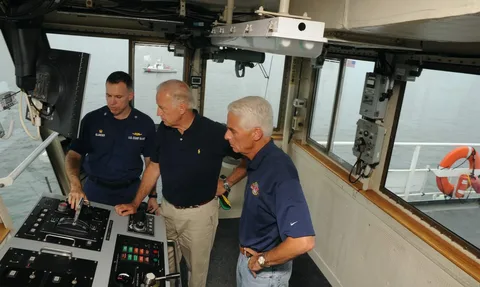
Maritime organizations face a rare compliance overlap that blends physical operations with digital defense. Vessels, ports, and supporting contractors must answer to Coast Guard cyber rules while also meeting federal CMMC compliance requirements tied to defense work. Aligning these frameworks early reduces audit friction and helps teams prepare for CMMC assessment without duplicating effort.
Mapping Vessel Cyber Rules to Access Control Requirements
Coast Guard cyber guidance places heavy emphasis on controlling who can access vessel systems, especially navigation, propulsion, and cargo controls. These expectations align closely with CMMC controls that govern user identification, authentication, and role-based access. By mapping shipboard access rules directly to CMMC level 1 requirements and CMMC level 2 requirements, organizations can apply one access model across both regimes.
Access mapping also clarifies scope during a CMMC scoping guide review. Ship systems that influence safety or mission operations often qualify as in-scope assets. Treating them consistently prevents gaps that frequently appear during a CMMC pre assessment and reduces common CMMC challenges tied to unclear boundaries.
Matching Incident Reporting Timelines Across Both Standards
Incident response timelines differ slightly between maritime rules and CMMC security expectations. Coast Guard reporting often prioritizes operational impact, while CMMC compliance requirements emphasize documentation, containment, and recovery evidence. Aligning internal timelines ensures both needs are met without confusion.
Teams that synchronize reporting workflows avoid delays that trigger findings. A shared timeline also supports the CMMC RPO by defining recovery expectations that work for both regulators. This alignment strengthens documentation reviewed during an intro to CMMC assessment and Coast Guard inspections alike.
Using Shared Risk Assessments for Audits and Inspections
Risk assessments sit at the center of both frameworks. Coast Guard rules require evaluating cyber risk to vessel operations, while CMMC level 2 compliance demands formal risk analysis tied to system impact. Using a single risk methodology satisfies both without creating parallel reports.
Shared assessments also improve audit readiness. Inspectors and CMMC consultants can trace how risks were identified, scored, and mitigated using one source of truth. This approach simplifies compliance consulting and reduces rework before third-party reviews.
Aligning Network Monitoring with Maritime System Needs
Maritime environments rely on specialized networks that differ from typical office IT. Navigation systems, engine controls, and port interfaces require monitoring that respects operational uptime. Aligning network monitoring with CMMC controls ensures visibility without disrupting vessel functions.
Effective alignment recognizes that not all alerts carry the same weight. Security teams tailor thresholds to maritime realities while still meeting CMMC security expectations for detection and response. This balance supports continuous oversight rather than one-time checks.
Applying Credential Rules to Ship and Shore Systems
Credentials often span shipboard and shore-based systems. Coast Guard guidance expects tight control over who can access critical functions, while CMMC level 2 requirements demand strong credential hygiene across environments. Applying one credential policy avoids fragmentation.
Unified credential rules simplify enforcement and audits. They also reduce risk tied to shared accounts or outdated access. During consulting for CMMC, credential consistency often emerges as a deciding factor in assessment outcomes.
Syncing Log Retention with Coast Guard Review Periods
Logs provide evidence of both compliance and incident handling. Coast Guard reviews may request historical logs tied to specific voyages or events, while CMMC compliance requirements define minimum retention periods. Aligning retention policies satisfies both without excessive storage.
Clear retention schedules help teams respond quickly to requests. Logs become easier to retrieve during inspections or C3PAO reviews. This preparation supports smoother assessments and fewer follow-up questions.
Treating Ot Systems As In-scope for Cmmc Controls
Operational technology systems are central to maritime safety. Treating OT as in-scope aligns with Coast Guard expectations and modern CMMC scoping guide interpretations. Ignoring these systems often leads to findings during a CMMC pre assessment.
Including OT systems early allows teams to apply appropriate safeguards without disrupting operations. This approach addresses common CMMC challenges where organizations underestimate the role of non-traditional systems in compliance.
Unifying Vendor Security Checks for Ports and Contractors
Ports and vessels rely on third-party vendors for maintenance, software, and connectivity. Coast Guard rules and CMMC controls both expect oversight of these relationships. A unified vendor security process meets both standards efficiently.
Consistent vendor checks reduce blind spots. They also support government security consulting efforts by demonstrating control over external risk. During preparing for CMMC assessment, vendor management often proves easier when processes already align with maritime expectations.
Keeping Evidence Ready for Both Regulators Year-round
Compliance cannot rely on last-minute preparation. Coast Guard inspections and CMMC assessments may occur on different schedules, but both require accessible evidence. Keeping documentation current supports year-round readiness. Centralized evidence management reduces stress and improves accuracy. It also shortens review cycles with a C3PAO and maritime inspectors. This readiness mindset turns compliance into an operational habit rather than a scramble. Aligning Coast Guard cyber rules with CMMC controls demands technical insight and regulatory experience. MAD Security helps clients maintain secure operations that satisfy regulators and strengthen overall security posture.
